
%2C%20%D0%BA%D0%BE%D0%BF%D0%B8%D1%8F.jpg)
Family Reunification in Latvia in 2026
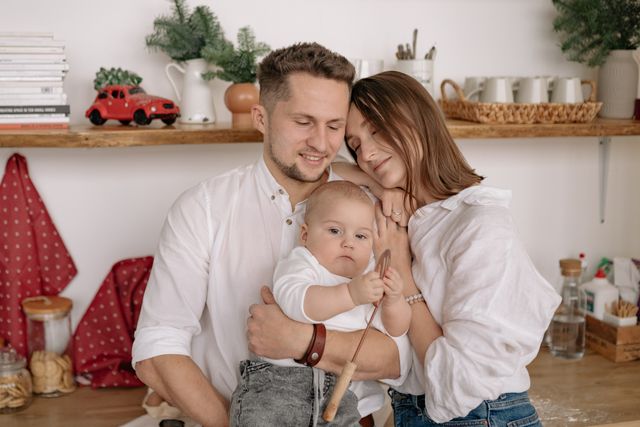
Family Reunification in Latvia in 2026: Who Counts as a Family Member and How to Get a Residence Permit
A family should not have to live in two countries. This simple thought is familiar to everyone who has found themselves in a situation where one spouse has already settled in Latvia while the other waits abroad. Or when parents want to move to be with their grown children, and children want to be with their elderly parents. Family reunification is not just a legal term; it is about the chance to be together again under one roof. And the good news is that this very basis for a residence permit is considered one of the most reliable in Latvia.
In this article we will examine in detail how family reunification works in Latvia in 2026. You will learn who counts as a family member under the law, what income is needed, which documents to gather, and for how long the residence permit is issued. We will dwell separately on the nuances for Russian citizens. All the information rests on current data from the Office of Citizenship and Migration Affairs (PMLP) and the norms of the Immigration Law. Let us start with the main question: who can invite at all.
Who Counts as a Family Member
The first and most important question: who can act as the inviting party and who can receive the status. The law answers this quite specifically. The right to file an application for a residence permit through family reunification arises if your spouse, parent, or child is a citizen of Latvia, a non-citizen of Latvia, or a foreigner with a permanent residence permit. This is the base circle of close relatives.
But the circle of relatives is wider than many think. In addition to spouses, parents, and children, the basis can also extend to more distant relatives up to the third degree of kinship vertically or horizontally. This can include, for example, grandchildren, grandparents, and in certain cases brothers and sisters. The most common and reliable scenario is spouses: if your husband or wife has Latvian status, you have a direct right to file an application. According to statistics, this very path shows the highest approval rate among all categories.
Income Requirements in 2026
The Latvian state wants to make sure that a reunited family will be able to support itself. So the income requirement is one of the key elements, and in 2026 the bar has risen noticeably. If previously you had to prove income from 750 euros per month for the main applicant, now this sum has risen to 950 euros per month.
For each family member a separate sum is added, which has grown from 210 to 285 euros per month. Let us calculate with a concrete example. A family of three, that is, the applicant, the spouse, and a child, must confirm a combined income of no less than 1,520 euros per month. This is a serious change that filters out part of the potential applicants. For comparison: the minimum wage in Latvia in 2026 is 780 euros. So proof of income should be approached responsibly, and all the necessary certificates should be gathered in advance.
Which Documents Are Needed: The Full List
Now the most practical part. The exact set of documents depends on your kinship and citizenship, but the base set for family reunification looks like this. Prepare these documents in advance, because some of them require translation and certification, and that takes time.
- A completed application form for a residence permit according to the PMLP sample.
- A valid foreign passport and a copy of all pages with markings.
- A marriage certificate or kinship documents with an apostille and translation into Latvian.
- A copy of the passport or identity card of the Latvian relative.
- Confirmation of cohabitation or of the intention to live together.
- A criminal record certificate for applicants over 14, no older than 6 months, with translation and certification.
- Proof of sufficient income for the entire period of stay.
- A photograph: color, 35 by 45 mm, taken no later than three months ago.
- A receipt confirming payment of the state fee.
An important rule: all documents in a foreign language must be translated into Latvian and notarized. The criminal record certificate is issued in the country of citizenship and also requires an apostille or legalization depending on the country. Minor children are automatically included in the application together with the main applicant; there is no need to file a separate form for them.
For How Long the Permit Is Issued and How to Renew It
All right, the documents are submitted, what next? A residence permit through family reunification is usually issued for 1 year with the possibility of renewing it each year. This means the status must be maintained: every year you confirm that the basis remains and the conditions are met. It sounds troublesome, but in practice it is a routine you quickly get used to.
For children there is a pleasant exception. If at the time of renewal the child is not yet 18, the residence permit is extended for them immediately for 5 years, which saves both time and money. After reaching adulthood, the child keeps the permit only if three conditions are met: they live together with the parents, are not married, and do not live in another country. If even one condition is not met, the status is not renewed, and the adult child must apply for a separate permit on another basis.
Personal Presence and the Order of Submission
There is an important requirement that many overlook when planning. Personal presence in Latvia is mandatory for every family member included in the application. This means that both the spouse and the children need to physically come to the country and appear at a PMLP division both at submission and at card collection. So plan the trip for the whole family in advance.
The process itself usually begins with arranging a type D visa, which is needed to enter for document submission. The state fee for it is 90 euros, and the processing time is 15 working days. Before submission, an invitation or call is arranged through the PMLP electronic service. Only after that can you submit the main set of documents for the residence permit. Each step logically leads to the next, so it is better to act in order and not skip stages.
Nuances for Russian Citizens
For Russian citizens, family reunification remains one of the available grounds, but with important additional conditions. First of all, a special questionnaire with data about family and military service is added to the standard set of documents. This questionnaire is filled in by citizens of Russia and Belarus, and it must be completed carefully so that the data matches the other documents.
The second key requirement concerns the passport. For Russian citizens, only passports with biometric data are recognized, and without a biometric chip it will not be possible to submit documents. This requirement applies to all categories, including children. In addition, because of the additional security checks, the processing time for Russian citizens may be longer than standard. The conclusion is simple: submit with a time reserve, check the validity of the biometric passport for all family members in advance, and prepare the documents carefully.
What to Do If the Basis Has Changed
Life can be unpredictable, and sometimes the basis for a residence permit ceases to exist. A classic example: a person received a residence permit through family reunification and then divorced. Formally the basis has disappeared, and at renewal PMLP may refuse. This is a painful but important situation to understand, one it is better to be ready for in advance.
What to do in such a case? The best solution is not to stay silent and hope no one notices. PMLP checks the relevance of the basis at every renewal. So if your family situation has changed, it is wiser to re-register the status on another basis in advance or to file an application for a new permit before the current term expires. A consultation with a lawyer a few months before renewal helps to calmly correct the situation and not lose legal status due to changed circumstances.
All requirements should be checked against official sources. The rules and forms are published by the Office of Citizenship and Migration Affairs (PMLP), the texts of the laws are available on the likumi.lv portal, and the invitation is arranged through the PMLP electronic service.
Frequently Asked Questions
Who counts as a family member for reunification?
The right to file an application arises if a spouse, parent, or child is a citizen of Latvia, a non-citizen, or a foreigner with a permanent residence permit. In a number of cases the basis extends to relatives up to the third degree of kinship, for example grandchildren and grandparents.
What income is needed for family reunification in 2026?
You need to confirm income from 950 euros per month for the main applicant plus 285 euros for each family member. For example, a family of three needs a combined income of no less than 1,520 euros per month.
For how long is the permit issued through family reunification?
Usually the residence permit is issued for 1 year with the possibility of annual renewal. For minor children, at renewal the status is extended immediately for 5 years, if the child is not yet 18.
Which documents do Russian citizens need?
Russian citizens need to attach a special questionnaire with data about family and military service to the standard set. A passport with biometric data is also mandatory. Because of additional checks, the processing time may be longer than usual.
What happens to the permit in the event of divorce?
In the event of divorce, the basis for a residence permit through family reunification formally disappears, and refusal is possible at renewal. In such a situation it is wiser to re-register the status on another basis in advance or to file an application for a new permit before the current term expires.
How Lex&Finance Specialists Can Help You
Lex&Finance accompanies family reunification in Latvia at every stage and helps to gather loved ones under one roof again. Our lawyers determine which of your relatives can act as the inviting party, check compliance with the income requirements, and help to correctly confirm the family’s combined income in line with the updated thresholds of 2026. We prepare the full set of documents, organize translation and notarization, help with the apostille and the criminal record certificate, and correctly arrange the invitation through the PMLP electronic service. For Russian citizens we correctly complete the additional questionnaire and check the validity of all family members’ biometric passports in advance. If your family situation has changed, we will help re-register the basis in advance so that you do not lose your status. We work in Russian and Latvian. Contact us for a free initial consultation through the lexfinance.lv website or by phone, and we will help your family reunite calmly and in accordance with the law.
.svg)